
How to Check Your Waste Carrier Is Licensed (and Avoid Fly-Tipping Fines)
Blogs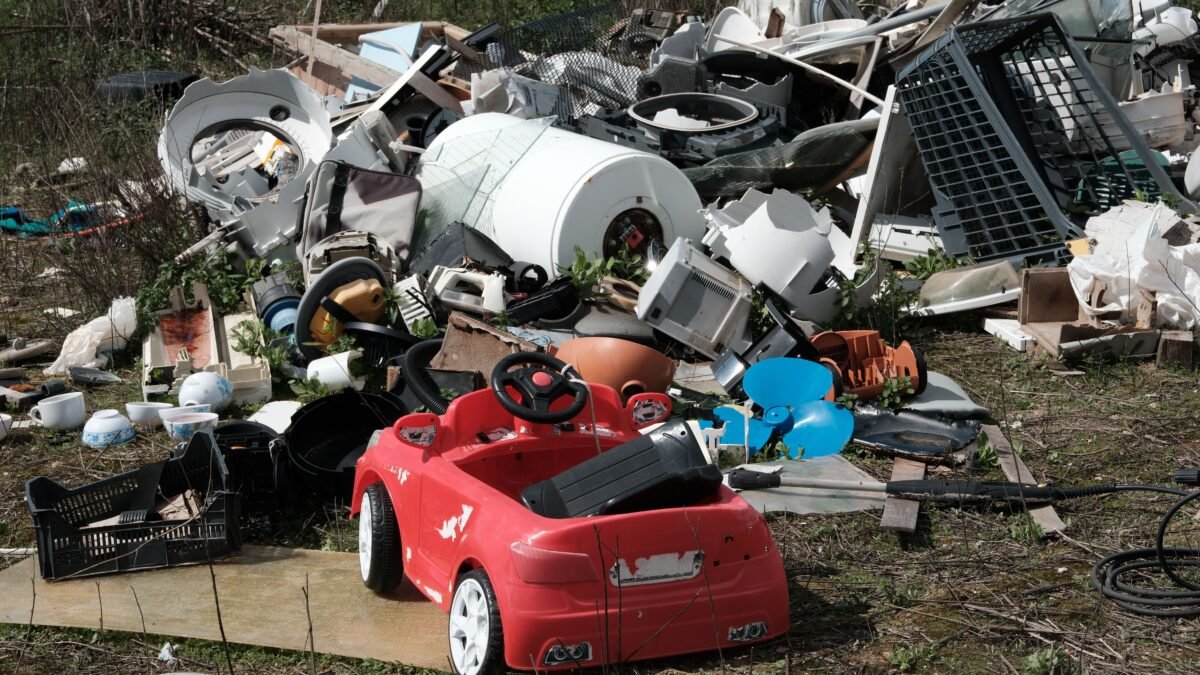
Clearing out a garage, renovating a kitchen or emptying a loft usually ends with the same question: who is going to take all this away? Plenty of people answer an advert, hand over cash and never think about it again. But if that rubbish ends up dumped in a lay-by, the person who could be fined is you.
The good news is that protecting yourself takes about two minutes. Here’s what the law says, how to check a waste carrier’s licence, and the warning signs to look out for.
You’re responsible for your rubbish, even after it leaves
Under the Environmental Protection Act 1990, every householder has a “duty of care” for their waste. In plain English, you must take reasonable steps to make sure anyone who takes your rubbish away is allowed to do so.
If your waste is fly-tipped and traced back to you, you can’t simply say you paid someone to deal with it. Councils can issue a fixed penalty notice of up to £600 to householders who fail to check, and more serious cases can go to court. Councils across the country regularly fine residents whose rubbish was dumped by an unlicensed “man with a van”.
What is a waste carrier licence?
Any business that transports other people’s waste as part of its work must register as a waste carrier. In England, that registration is with the Environment Agency. In Wales, Scotland and Northern Ireland, it’s handled by Natural Resources Wales, SEPA and NIEA respectively.
That covers rubbish removal firms, skip companies, house clearance businesses, and builders or gardeners who take waste away from a job. If someone is taking your waste away in a van for payment, they almost certainly need one. A registered business will have a registration number, often starting with “CBDU” in England, and should be happy to give it to you.
How to check a licence in minutes
Checking is free, quick and can be done from your phone:
- Ask the company for its waste carrier registration number and its registered business name.
- Go to the Environment Agency public register and choose the waste carriers, brokers and dealers register.
- Search by the registration number, business name or postcode.
- Check the details match. The name and address should be the company you’re actually dealing with, and the registration should be current.
If you can’t find them, or the details don’t match, don’t hand over your rubbish. A genuine business won’t mind you checking. In fact, the good ones expect it.
Red flags to watch out for
Unlicensed operators often follow a familiar pattern. Be cautious if you notice any of the following:
- Cash only, with no paperwork. Legitimate firms give you a receipt or invoice and can take card or bank payments.
- A price that seems too good to be true. Proper disposal costs money. Very cheap quotes can mean your waste is being dumped rather than taken to a licensed site.
- Unmarked vans and no business address. A mobile number and a social media post aren’t enough to trace someone if things go wrong.
- Vague answers about where the waste is going. A reputable carrier will tell you which site or recycling centre they use.
- No waste transfer note. For business waste, a waste transfer note is a legal requirement. For household jobs, ask for a receipt that shows the company name, its registration number and a description of the waste.
What to do if your rubbish is fly-tipped
If you discover that waste you paid to have removed has been dumped, contact your local council straight away. Give them everything you have: the company name, phone number, vehicle registration, any messages or adverts, and your receipt. Showing you made a genuine effort, and reporting it quickly, puts you in a much stronger position.
That’s why keeping a record matters. A screenshot of the register entry, saved with your receipt, takes seconds and could save you a fine.
Your quick checklist before booking a clearance
- Get the company’s waste carrier registration number.
- Check it on the Environment Agency public register.
- Make sure the name and address match the business you’re dealing with.
- Ask where your waste will be taken.
- Get a written quote and a receipt showing the company’s details.
- Avoid cash-only deals with no paperwork.
- Keep your records for at least a few months after the job.
The bottom line
Checking a waste carrier licence is one of the easiest ways to protect yourself, your wallet and your local area. Fly-tipping costs councils millions to clean up every year, and much of it starts with a quick cash job that nobody checked. Two minutes on the public register is all it takes to make sure your rubbish ends up in the right place.
About the author
Stan works at Snappy Rubbish Removals, a licensed waste clearance company covering London. He writes about responsible waste disposal and helping households avoid the pitfalls of rubbish removal.
Need rubbish removed?
Junkbusters is a licensed waste carrier covering Birmingham and the West Midlands. Same-day collections, all lifting included.
More rubbish removal guides
 Blogs
Fly-tipping Birmingham
We are going to show you the impacts of fly-tippers and how to avoid them.
Read article
 Blogs
Birmingham Skip Hire Services to Avoid Waste & Save Money
Waste management is a huge issue in the world. Waste management is the process of collecting, transporting, processing, and disposing of waste…
Read article
 Blogs
Garden Waste Removal, Garden Clearance & House Clearance in Birmingham: The Complete Guide
In the heart of the Midlands, where city life collides with leafy suburbia, mess has a way of sneaking into our lives—whether it’s autumn leaves…
Read article